
Release time:19 5 月, 2026
In industrial fertilizer manufacturing, the mixing and blending stage directly establishes the chemical uniformity and commercial value of the final product. Raw materials—ranging from highly acidic organic composts to abrasive inorganic chemicals like urea, ammonium phosphate, and potassium chloride—present severe operational challenges. Standard carbon steel components quickly degrade under these conditions, leading to material contamination and frequent mechanical failures.
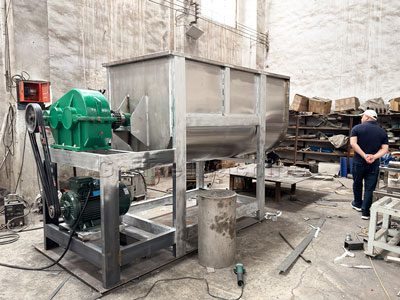
Deploying a high-capacity stainless steel fertilizer mixer is the definitive engineering choice to combat corrosive wear, eliminate material cross-contamination, and maintain an industrial-scale output.
Advanced Material Integrity: Grade 304 vs. Grade 316 Stainless Steel
The choice of structural steel determines the operational lifespan of the blending machinery. Industrial mixing equipment is fabricated using specific alloy grades tailored to the chemical stress of the material flow:
Grade 304 Stainless Steel: The standard choice for commercial organic and inorganic fertilizer lines. It offers robust resistance to atmospheric corrosion and organic acids, preventing rust formation during the intensive blending of raw manures, peat, and chemical powders.
Grade 316 Stainless Steel: Engineered for extreme environments, Grade 316 contains molybdenum. This addition dramatically increases resistance to chlorides and concentrated chemical acids, making it essential for processing specialty water-soluble formulations and advanced compound NPK fertilizers.
Utilizing stainless steel wetted parts ensures that the mixer maintains a smooth internal surface over decades of service, preventing material adhesion and minimizing friction.
Principal Configuration Options for Fertilizer Blending Lines
Depending on the physical state of the raw ingredients and the layout of the production plant, different mechanical mixing structures are utilized to optimize processing efficiency.
1. Horizontal Double-Shaft Mixer
Ideal for high-throughput continuous processing lines, this configuration features two synchronized shafts equipped with overlapping paddles.
Processing Action: The counter-rotating paddles drive materials along both axial and radial directions, creating a fluidizing effect that eliminates processing dead zones.
Application: Highly effective for adding trace liquid components or microbial inoculants into dry organic manure bases, ensuring a completely homogeneous distribution within seconds.
2. Industrial Ribbon Blender
Designed with inner and outer helical ribbons mounted on a single horizontal shaft, the ribbon blender is preferred for precise batch mixing of dry powders and fine granules.
Processing Action: The outer ribbon moves the material from the edges toward the center, while the inner ribbon pushes the material from the center toward the ends, creating a continuous, high-shear convection loop.
Application: Excellent for blending multi-nutrient NPK formulations where granular degradation must be strictly minimized.
Technical Integration within a 1–20 TPH Processing Flow
To maintain a continuous, uninhibited material flow, the stainless steel fertilizer mixer must be strategically synchronized with adjacent processing sections:
Pre-Mixing Batching Integration: Raw materials are transferred from computerized multi-hopper batching scales directly into the mixer. The clean, non-stick surface of the stainless steel tub ensures that the carefully measured ratios are preserved without material retention from previous batches.
Pneumatic Discharge Gate System: Industrial mixers utilize heavy-duty pneumatic slide gates or “bomb-bay” drop doors at the discharge port. This facilitates immediate empty-out cycles, preventing raw material segregation and optimizing the processing cycle time.
Downstream Granulation Supply: The completely blended, homogeneous mash is discharged directly onto heavy-duty belt conveyors or bucket elevators, delivering a uniform feed to either a stirring tooth or rotary drum granulator.
Optimize Your Fertilizer Blending Process
Are you facing equipment degradation or inconsistent nutrient blending in your current factory setup? Our engineering team specializes in configuring heavy-duty 1–20 TPH production lines featuring high-performance stainless steel fertilizer mixers tailored to your raw material profile.
📩 Contact our technical department today for a customized production line blueprint, structural specifications, and a comprehensive equipment quotation!
 Hi, this is YAN, Want details & price?
