
Release time:15 7 月, 2026
In the chemical and agricultural industries, selecting the right granulation technology is the cornerstone of a profitable fertilizer business. NPK compound fertilizers require precise nutrient ratios, but their physical properties vary wildly depending on your formula. Using an incompatible NPK fertilizer granulator machine results in low granulation rates, high energy consumption, and poor granule strength.
To help you navigate the complex types of fertilizer granulation process configurations, we have compiled this comprehensive engineering guide. Whether you are setting up a large-scale industrial facility or a compact organic-inorganic production loop, understanding these core technologies will optimize your ROI.
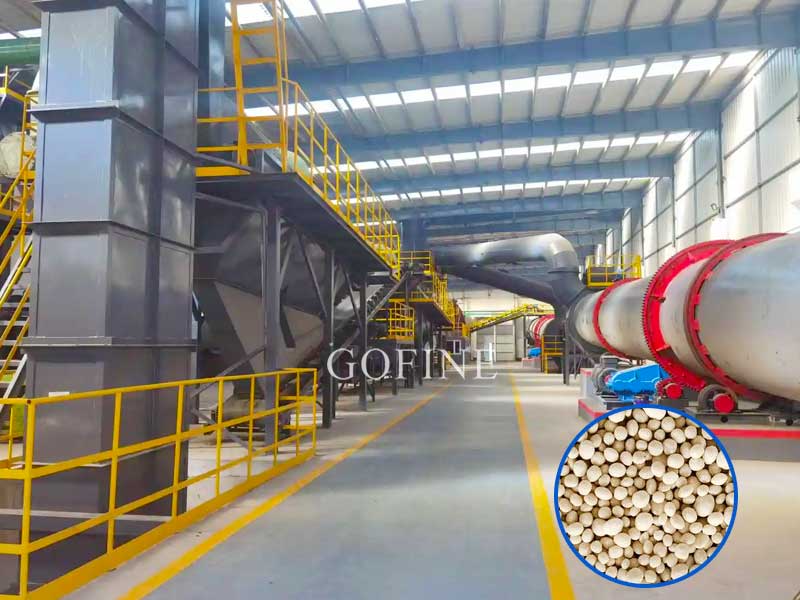
For chemical engineers and procurement managers mapping out factory designs, here is a professional comparison of the three most popular NPK fertilizer granulator methods:
| Granulator Type | Best Suited Materials & Capacity | Key Technical Advantage |
|---|---|---|
| Rotary Drum Granulator | High-capacity NPK (Steam/Water wet granulation). 5-30 TPH. | Massive output, excellent granule roundness, heavy-duty continuous running. |
| Disc / Pan Granulator | Medium-scale organic/inorganic NPK. 1-6 TPH. | Highly adjustable pellet size, real-time visual monitoring, low initial cost. |
| Double Roller Extrusion | Dry granulation (No drying needed, low moisture). 1-4 TPH. | Zero heating/drying required, energy-saving, ideal for heat-sensitive formulas. |
When designing a wet granulation line, the choice often boils down to a rotary drum granulator vs disc granulator setup. Both rely on liquid binders to agglomerate fine powders, but their mechanical dynamics are completely different.
If your project demands a high-volume organic NPK fertilizer fertilizer production line (typically exceeding 10 tons per hour), the rotary drum is the industry standard. By introducing steam or water into the rotating drum, the material bed rolls and agglomerates under centrifugal force. It features a specialized rubber liner to prevent material sticking and accommodates high-nitrogen formulas that require heat to granulate efficiently.
For specialty fertilizer brands or startup factories, the disc granulator offers unmatched flexibility. The angle of the pan can be adjusted in real-time to control the residence time of the granules. This visual control allows operators to produce highly uniform, spherical pellets. With a granulation rate of up to 93%, it minimizes recycling loops and lowers initial capital expenditures (CAPEX).
What if your NPK formula contains raw materials that decompose under high temperatures, or you want to bypass the expensive drying and cooling stages? This is where the double roller extrusion granulator excels.
Operating entirely on physical dry compression, the powder is squeezed between two counter-rotating rollers at high pressure to form dense sheets, which are then cracked into uniform granules. It is the most energy-efficient technology on the market because it eliminates the need for coal, gas, or biomass-fired rotary dryers, dramatically reducing your operational expenditures (OPEX) and factory carbon footprint.
Before purchasing your granulator, our technical engineering team recommends defining these key operational parameters:
Investing in fertilizer processing machinery is a long-term commitment. As a leading manufacturer of chemical and organic fertilizer equipment, our plants hold complete CE and ISO certifications, ensuring flawless integration and local environmental compliance worldwide.
We offer turnkey engineering services (EPC), including custom 3D factory layout, raw material testing, professional installation, and lifetime wear-parts support. Let us engineer the perfect pellet for your market.
Ready to upgrade your fertilizer production? Contact our process engineers today for a tailored technical consultation and a factory-direct price quote!

 Hi, this is YAN, Want details & price?
